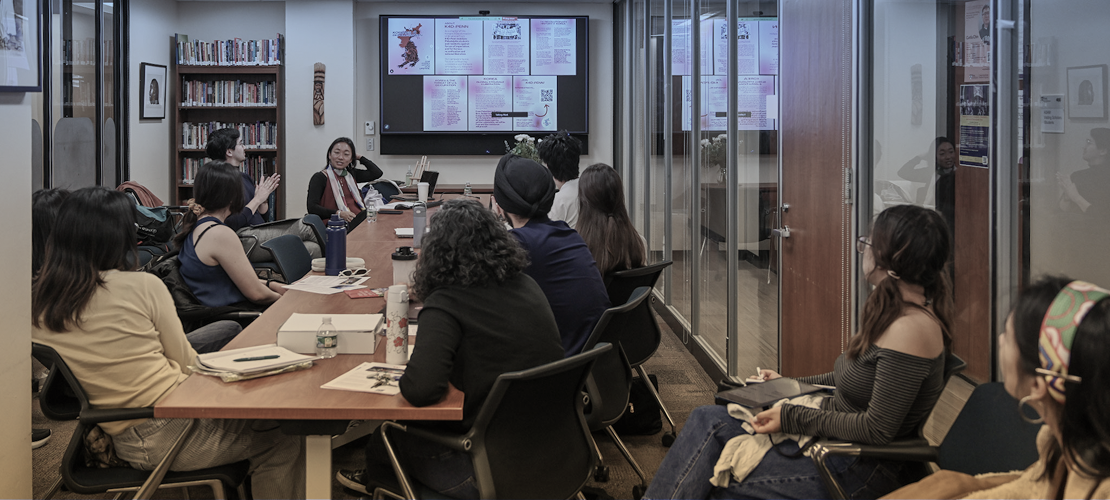
Our grassroots-powered political education is changing the narrative on the Korean War. Learn from us.
The Korean War is the longest-standing U.S. conflict. While it no longer consists of active fighting, hostilities between the warring parties have remained high, resulting in the extreme militarization of the Korean Peninsula. Why do we need a Korea peace agreement, and how can we achieve peace on the Korean Peninsula? Read below for answers to these questions, and more.
FAQs
Why do we need a Korea peace treaty or agreement?
The Korean War (1950–’53) never ended but was merely suspended by an armistice agreement. More than 70 years later, the absence of a peace treaty means the Korean Peninsula remains technically at war. This unresolved conflict fuels military tensions, keeps families divided, and sustains the cycle of hostility. A formal peace agreement would officially end the war, reduce the threat of renewed fighting, and create the foundation for lasting peace and security.
Why do women need to be involved in the Korea peace process?
From Liberia to Northern Ireland, women have been instrumental in creating peace agreements that last. Research consistently shows peace agreements are more sustainable and effective when women are involved. Women often broaden the agenda, raising issues like family reunions, economic well-being, and community healing — concerns that directly affect everyday life but are often overlooked in traditional security-driven talks. Including women helps ensure that peace is not only negotiated but also lived and maintained.
Is North Korea serious about denuclearization?
Although we can’t second-guess North Korea’s intentions, here’s what we know: North Korea has participated in multiple rounds of negotiations in the past and has paused weapons testing during talks. Their government has repeatedly stated that denuclearization is possible if its security concerns are addressed. A peace-first approach — one that replaces the armistice with a formal peace agreement — can build the trust needed to create the right conditions for meaningful progress on denuclearization.
How does the U.S. benefit from peace in Korea?
Ending the Korean War with a peace agreement reduces the risk of military escalation that could draw in U.S. forces and resources. It strengthens global stability, opens doors for economic and diplomatic cooperation in the region, and supports America’s credibility as a leader in peacemaking. By helping to secure peace, the U.S. can move away from endless war footing and toward constructive, future-oriented engagement with both Koreas and the broader Asia-Pacific region.
What can ordinary people do to help?
Lasting peace isn’t built only by governments — it also requires public support and citizen action. People can raise awareness by sharing accurate information, attending events, writing to policymakers, and supporting organizations working for peace on the Korean Peninsula. Collective voices make it harder for leaders to ignore the call for change. History shows that when communities speak up for peace and justice, they can shift the political will and make what once seemed impossible, possible.