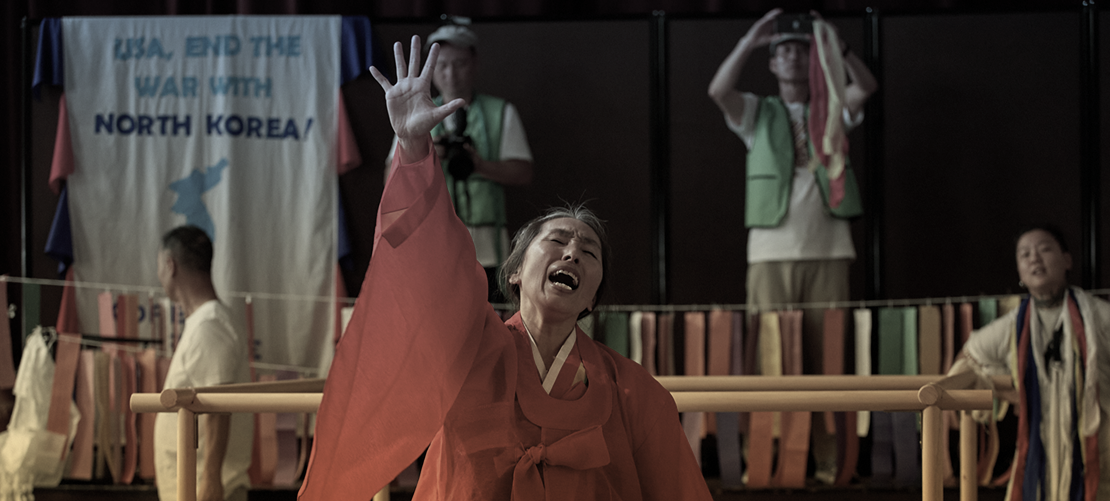
The following list of books and films — by no means exhaustive — is a starting place to understand the origins and ongoing consequences of the so-called “forgotten war” in Korea, calling us to imagine peaceful alternatives for our future.
Book Recommendations
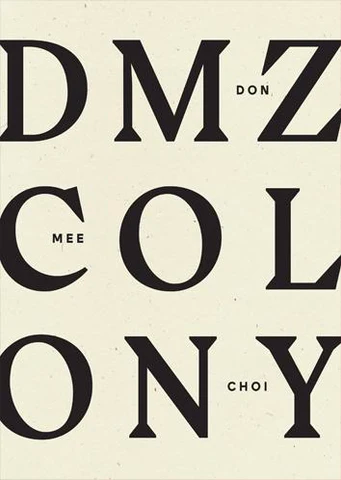
DMZ Colony
by Don Mee Choi
Woven from poems, prose, photographs, and drawings, Don Mee Choi’s DMZ Colony is a tour de force of personal and political reckoning set over eight acts. Evincing the power of translation as a poetic device to navigate historical and linguistic borders, it explores Edward Said’s notion of “the intertwined and overlapping histories” in regards to South Korea and the United States through innovative deployments of voice, story, and poetics. Like its sister book, Hardly War, it holds history accountable, its very presence a resistance to empire and a hope in humankind.
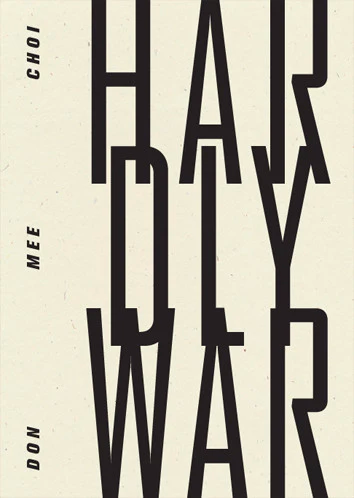
Hardly War
by Don Mee Choi
Hardly War, Don Mee Choi’s major second collection, defies history, national identity, and militarism. Using artifacts from Choi’s father, a professional photographer during the Korean and Vietnam wars, she combines memoir, image, and opera to explore her paternal relationship and heritage. Here poetry and geopolitics are inseparable twin sisters, conjoined to the belly of a warring empire.
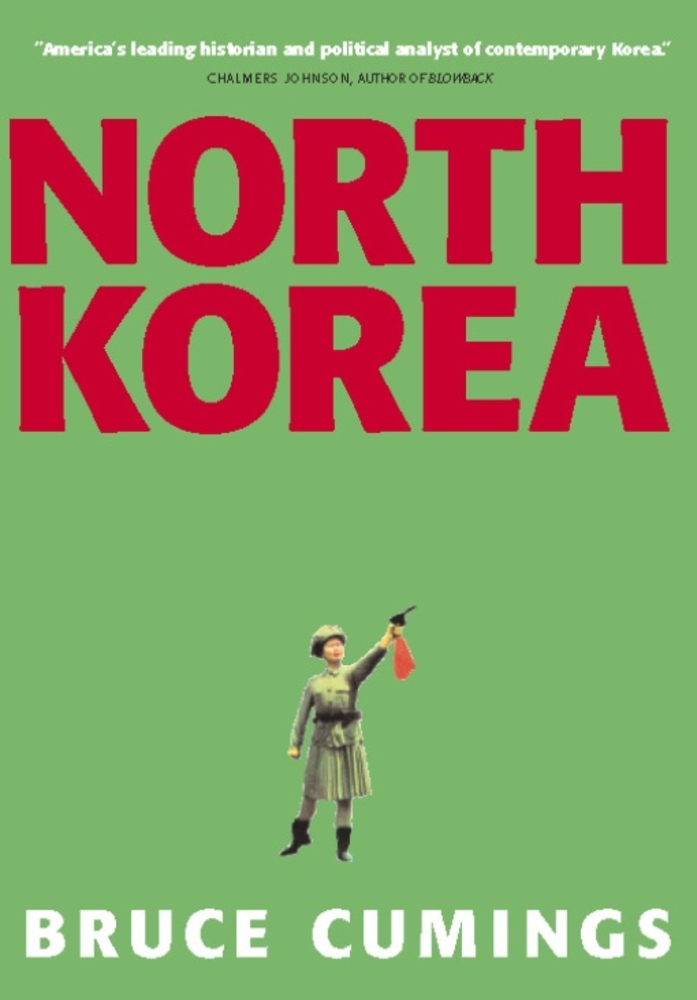
North Korea: Another Country
by Bruce Cumings
Depicted as an insular and forbidding police state with an insane dictator at its helm, North Korea–charter member of Bush’s Axis of Evil–is a country the U.S. loves to hate. Now the CIA says it possesses nuclear, chemical, and biological weapons, as well as long-range missiles capable of delivering them to America’s West Coast.
But, as Bruce Cumings demonstrates in this provocative, lively read, the story of the U.S.-Korea conflict is more complex than our leaders or our news media would have us believe. Drawing on his extensive knowledge of Korea, and on declassified government reports, Cumings traces that story, from the brutal Korean War to the present crisis. Harboring no illusions regarding the totalitarian Kim Jong Il regime, Cumings nonetheless insists on a more nuanced approach. The result is both a counter-narrative to the official U.S. and North Korean versions and a fascinating portrayal of North Korea, a country that suffers through foreign invasions, natural disasters, and its own internal contradictions, yet somehow continues to survive.
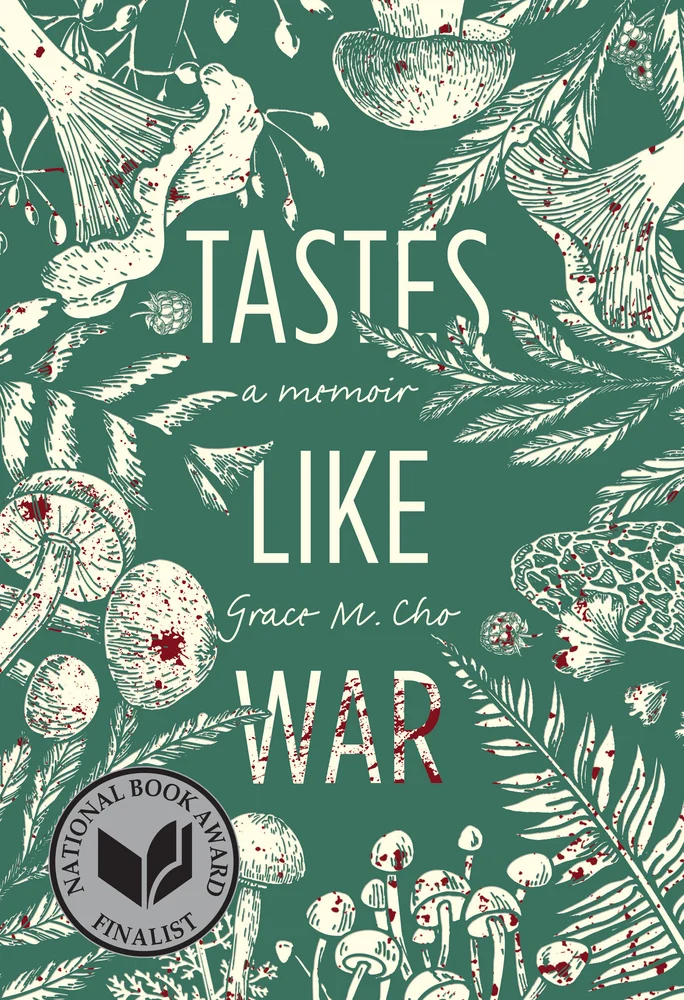
Tastes like War
by Grace M. Cho
Grace M. Cho grew up as the daughter of a white American merchant marine and the Korean bar hostess he met abroad. They were one of few immigrants in a xenophobic small town during the Cold War, where identity was politicized by everyday details—language, cultural references, memories, and food. When Grace was fifteen, her dynamic mother experienced the onset of schizophrenia, a condition that would continue and evolve for the rest of her life.
Part food memoir, part sociological investigation, Tastes Like War is a hybrid text about a daughter’s search through intimate and global history for the roots of her mother’s schizophrenia. In her mother’s final years, Grace learned to cook dishes from her mother’s childhood in order to invite the past into the present, and to hold space for her mother’s multiple voices at the table. And through careful listening over these shared meals, Grace discovered not only the things that broke the brilliant, complicated woman who raised her—but also the things that kept her alive.
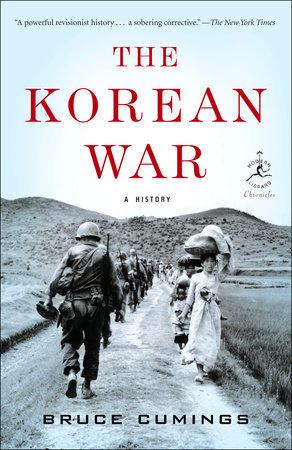
The Korean War
by Bruce Cumings
For Americans, it was a discrete conflict lasting from 1950 to 1953. But for the Asian world the Korean War was a generations-long struggle that still haunts contemporary events. With access to new evidence and secret materials from both here and abroad, including an archive of captured North Korean documents, Bruce Cumings reveals the war as it was actually fought. He describes its origin as a civil war, preordained long before the first shots were fired in June 1950 by lingering fury over Japan’s occupation of Korea from 1910 to 1945. Cumings then shares the neglected history of America’s post–World War II occupation of Korea, reveals untold stories of bloody insurgencies and rebellions, and tells of the United States officially entering the action on the side of the South, exposing as never before the appalling massacres and atrocities committed on all sides.
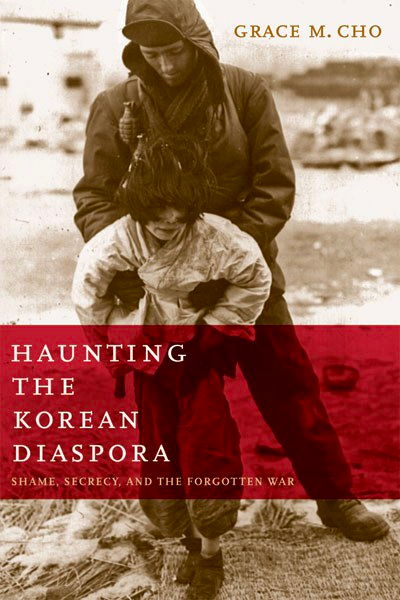
Haunting the Korean Diaspora
by Grace M. Cho
Through intellectual vigor, Haunting the Korean Diaspora explores the repressed history of emotional and physical violence between the United States and Korea and the unexamined reverberations of sexual relationships between Korean women and American soldiers.
At once political and deeply personal, Cho’s analysis of U.S. neocolonialism and militarism under contemporary globalization brings forth a new way of understanding—and remembering—the impact of the Korean War.
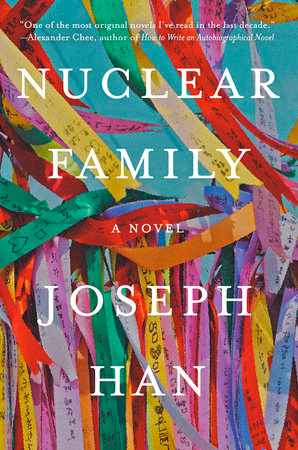
Nuclear Family
by Joseph Han
Set in the months leading up to the 2018 false missile alert in Hawaiʻi, Joseph Han’s profoundly funny and strikingly beautiful debut novel is an offering that aches with histories inherited and reunions missed, asking how we heal in the face of what we forget and who we remember.
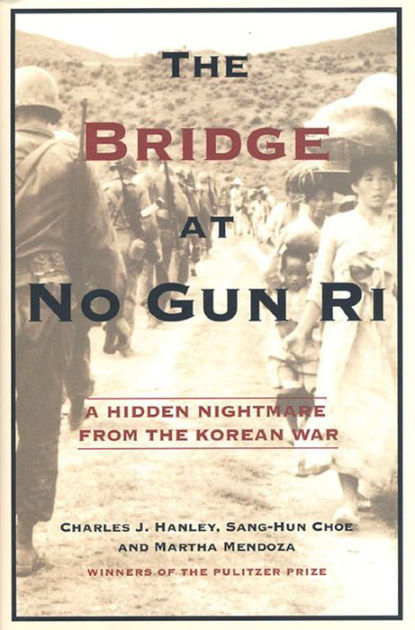
The Bridge at No Gun Ri
by Charles J. Hanley, Sang-hun Choe, and Martha Mendoza
In The Bridge at No Gun Ri, the team tells the larger, human story behind the incident through the eyes of the people who survived it: on the American side, the green recruits of the “good time” U.S. occupation army in Japan made up of teenagers who viewed unarmed farmers as enemies and generals who had never led men into battle; on the Korean side, the peasant families forced to flee their ancestral village caught between the invading North Koreans and the U.S. Army. The narrative looks at victims both Korean and American; at the ordinary lives and high-level decisions that led to the fatal encounter; at the terror of the three-day slaughter; at the memories and ghosts that forever haunted the survivors. The story of No Gun Ri also illuminates the larger story of the Korean War-also known as the Forgotten War-and how an arbitrary decision to divide the country in 1945 led to the first armed conflict of the Cold War.
The Interrogation Rooms of the Korean War
by Monica Kim
Traditional histories of the Korean War have long focused on violations of the thirty-eighth parallel, the line drawn by American and Soviet officials in 1945 dividing the Korean peninsula. But The Interrogation Rooms of the Korean War presents an entirely new narrative, shifting the perspective from the boundaries of the battlefield to inside the interrogation room. Upending conventional notions of what we think of as geographies of military conflict, Monica Kim demonstrates how the Korean War evolved from a fight over territory to one over human interiority and the individual human subject, forging the template for the US wars of intervention that would predominate during the latter half of the twentieth century and beyond.
North Korea/South Korea: U.S. Policy at a Time of Crisis
by John Feffer
The Korean peninsula, divided for more than fifty years, is stuck in a time warp. Millions of troops face one another along the Demilitarized Zone separating communist North Korea and capitalist South Korea. In the early 1990s and again in 2002-2003, the United States and its allies have gone to the brink of war with North Korea. Misinterpretations and misunderstandings are fueling the crisis. “There is no country of comparable significance concerning which so many people are ignorant,” American anthropologist Cornelius Osgood said of Korea some time ago. This ignorance may soon have fatal consequences.
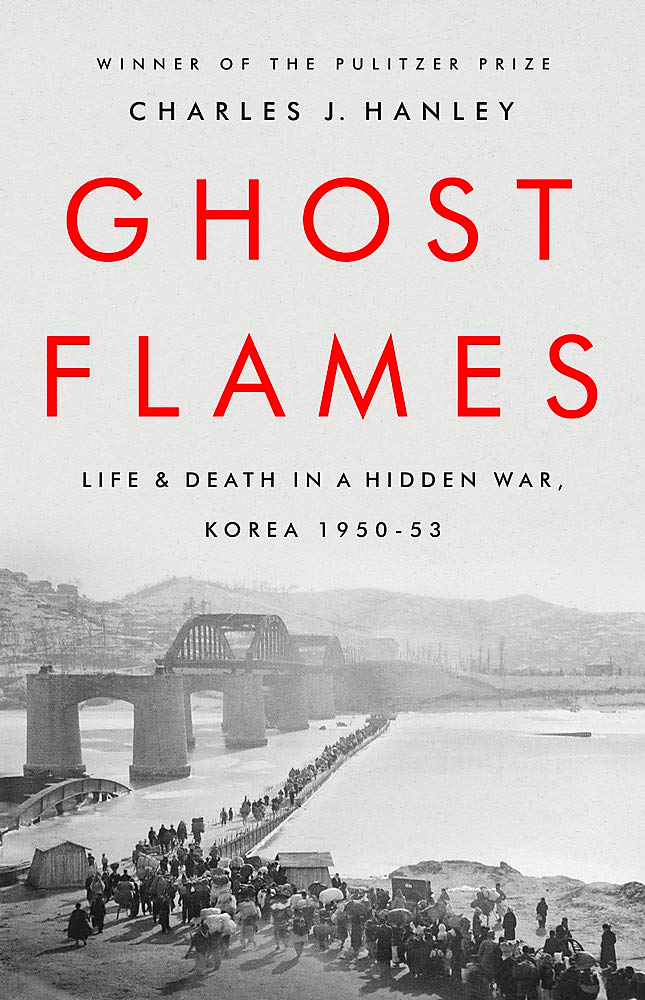
Ghost Flames: Life & Death in a Hidden War, Korea 1950-1953
by Charles J. Hanley
The war that broke out in Korea on a Sunday morning seventy years ago has come to be recognized as a critical turning point in modern history — as the first great clash of arms of the Cold War, the last conflict between superpowers, the root of a nuclear crisis that grips the world to this day.
In this vivid, emotionally compelling, and highly original account, Charles J. Hanley tells the story of the Korean War through the eyes of twenty individuals who lived through it–from a North Korean refugee girl to an American nun, a Chinese general to a black American prisoner of war, a British journalist to a U.S. Marine hero.
This is an intimate, deeper kind of history, whose meticulous research and rich detail, drawing on recently unearthed materials and eyewitness accounts, bring the true face of the Korean War, and the vastness of its human tragedy, into a sharper focus than ever before. The “forgotten war” becomes unforgettable.
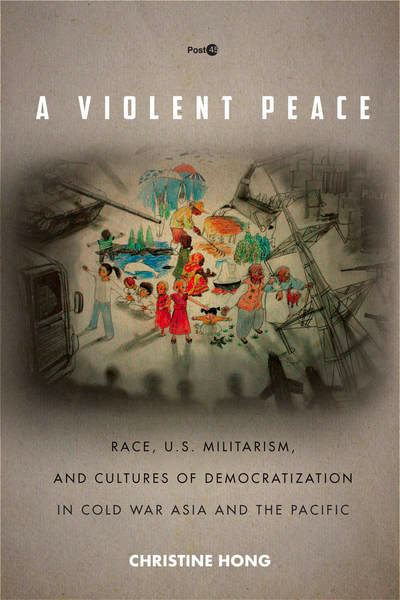
A Violent Peace
by Christine Hong
A Violent Peace offers a radical account of the United States’ transformation into a total-war state. As the Cold War turned hot in the Pacific, antifascist critique disclosed a continuity between U.S. police actions in Asia and a rising police state at home. Writers including James Baldwin, Ralph Ellison, and W.E.B. Du Bois discerned in domestic strategies to quell racial protests the same counterintelligence logic structuring America’s devastating wars in Asia.
Examining U.S. militarism’s centrality to the Cold War cultural imagination, Christine Hong assembles a transpacific archive―placing war writings, visual renderings of the American concentration camp, Japanese accounts of the atomic bombing of Hiroshima, black radical human rights petitions, Korean War–era G.I. photographs, Filipino novels on guerrilla resistance, and Marshallese critiques of U.S. human radiation experiments alongside government documents. By making visible the way the U.S. war machine waged informal wars abroad and at home, this archive reveals how the so-called Pax Americana laid the grounds for solidarity―imagining collective futures beyond the stranglehold of U.S. militarism.
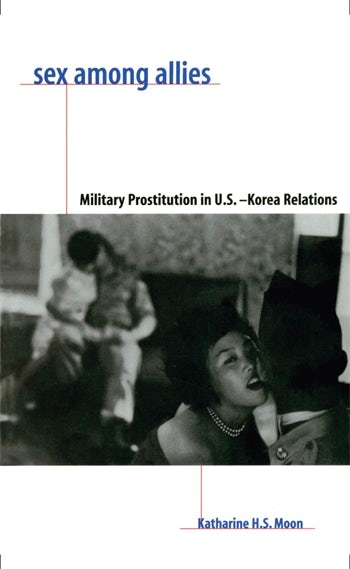
Sex Among Allies
by Katharine H.S. Moon
This study examines and illuminates how the lives of Korean prostitutes in the 1970s served as the invisible underpinnings to US-Korean military policies at the highest level.
Borderless
by Gary Pak
What will North America look like in the 2050’s?
Christopher Bulosan, a fifteen-year-old revolutionary of mixed ethnicities, narrates Borderless, a story of promise and opportunity in a post-capitalist/post-imperialist country formerly part of the United States of America. Join Christopher and his sister, Sora Rhee, on their journey through a city devastated by earthquakes and greed of the former ruling order, but during a time when a new world of sharing and equality is being built from the ashes of the old.
The Unending Korean War: A Social History
by Dong-Choon Kim
Dong-Choon Kim seeks to understand the true impact of the Korean War (1950-1953) on South Korea’s people and society. How did key figures such as President Syngman Rhee respond when North Korean troops crossed the thirty-eighth parallel and what does this tell us about the nature of the South Korean state at the time? How did South Koreans experience the North Korean occupation and what happened once Seoul and other areas were restored? Why were so many people brutally massacred by both sides? How does the war continue to influence South Korean institutions and society? This social history of the Korean War addresses these crucial questions, exposing and probing the war’s deepest wounds, wounds long concealed by Cold War rhetoric and successive oppressive military regimes in the South.
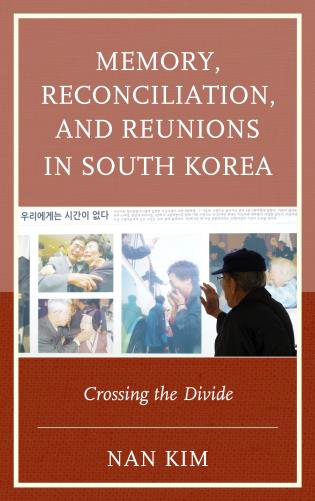
Memory, Reconciliation, and Reunions in South Korea
by Nan Kim
Drawing on reinterpretations of melancholia and collective remembrance, Memory, Reconciliation, and Reunions in South Korea: Crossing the Divide explores the multi-layered implications of divided Korea’s liminality, or its perceived “in-betweenness” in space and time. Offering a timely reconsideration of the pivotal period following the inter-Korean Summit of June 2000, this book focuses on a series of emotionally charged meetings among family members who had lost all contact for over fifty years on opposite sides of the Korean divide. With the scope of its analysis ranging from regional geopolitics and watershed political rituals to everyday social dynamics and intimate family narratives, this study provides a lens for approaching the cultural process of moving from a disposition of enmity to one of recognition and engagement amid the complex legacies of civil war and the global Cold War on the Korean Peninsula.
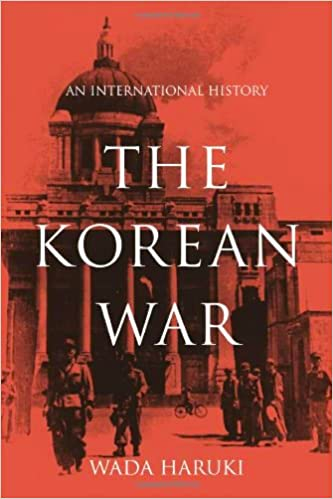
The Korean War: An International History
by Wada Haruki
This classic history of the Korean War–from its origins through the armistice–is now available in English for the first time. Wada Haruki, one of the world’s leading scholars of the war, has thoroughly revised his definitive study to incorporate new sources and debates. Drawing on archival and other primary sources in Russia, China, the United States, South Korea, Taiwan, and Japan, the author moves beyond national histories to provide the first comprehensive understanding of the Korean War as an international conflict from the perspective of all of the major actors. Tracing the North Korean invasion of South Korea in riveting detail, Wada provides new insights into the behavior of Joseph Stalin, Mao Zedong, Harry Truman, Kim Il Sung, and Syngman Rhee. He also provides new insights into the behavior of leaders and diplomats in Korea, China, Russia, and Eastern Europe and their rivals in other nations. He traces the course of the war from its origins in the failed attempts of both North and South Korean leaders to unify their country by force, ultimately escalating into a Sino-American war on the Korean Peninsula. Although sixty years have passed since the armistice, the Korean conflict has never really ended. Tensions remain high on the peninsula as Washington, Beijing, and Pyongyang, as well as Seoul and Pyongyang, face off. With rising international conflicts in East Asia, it is even more timely now to address the origins of the Korean War, the nature of the confrontation, and the ways in which it continues to shape the geopolitical landscape of Northeast Asia and the Western Pacific. With his unmatched ability to draw on sources from every country involved, Wada paints a rich and full portrait of a conflict that continues to generate controversy.
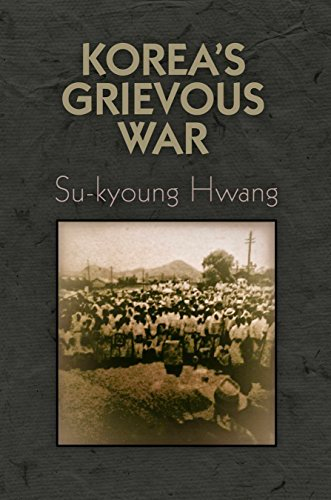
Korea’s Grievous War
by Su-kyoung Hwang
In 1948, two years before Cold War tensions resulted in the invasion of South Korea by North Korea that started the Korean War, the first major political confrontation between leftists and rightists occurred on the South Korean island of Cheju, where communist activists disrupted United Nations-sanctioned elections and military personnel were deployed. What began as a counterinsurgency operation targeting 350 local rebels resulted in the deaths of roughly 30,000 uninvolved civilians, 10 percent of the island’s population.
Korea: Division, Reunification and U.S. Foreign Policy
by Martin Hart-Landsberg
“Korean unification is one of the most important issues on the international agenda today…” — Noam Chomsky
Film Recommendations
Memory of Forgotten War
Conveys the human costs of military conflict through deeply personal accounts of the Korean War (1950-53) by four Korean-American survivors. Their stories take audiences through the trajectory of the war, from extensive bombing campaigns, to day-to-day struggle for survival and separation from family members across the DMZ.
Crossings
A group of international women peacemakers sets out on a risky journey across the demilitarized zone between North and South Korea, calling for an end to a 70-year war that has divided the Korean peninsula and its people. Comprised of Nobel Peace Laureates and renowned activists like Gloria Steinem and Christine Ahn, the intrepid team faces daunting logistical and political challenges as they forge a path with their Korean sisters toward peace and reconciliation.
그림자꽃 (Shadow Flowers)
A North Korean woman living in South Korea struggles to return to her family in the North, but finds her journey hindered by political absurdities.
Grandmother’s Flower
This interesting documentary investigates a complex history linking the repercussions of Japanese colonialism and the Korean War to the director’s family memories.
Insight: Into North Koreans
Reconnect Korea’s first documentary Insight: Into North Koreans draws attention to human-to-human and cultural interactions between the North Koreans, and those who became friends with them. Through the documentary we wish to provide a wider perspective on North Korea that steers away from the political lens.
People Are the Sky
Director Dai Sil Kim-Gibson makes a pilgrimage to her place of birth in North Korea for the first time in nearly 70 years, to explore if it is still home. Kim-Gibson seamlessly weaves her own personal story as a native-born North Korean with the fractious history of the North/South division and pinpoints the roots of North Korean’s hatred of the United States, giving Americans a much better understanding of the conflict.
Geographies of Kinship
In this powerful tale about the rise of Korea’s global adoption program, four adult adoptees return to their country of birth and recover the personal histories that were lost when they were adopted. Raised in foreign families, each sets out on a journey to reconnect with their roots, mapping the geographies of kinship that bind them to a homeland they never knew. Along the way there are discoveries and dead ends, as well as mysteries that will never be unraveled.
The Women Outside: Korean Women and the U.S. Military
Documenting the lives of women who work in the South Korean military brothels and clubs where over 27,000 women “service” the 37,000 American soldiers stationed in the most militarized region of the world, The Women Outside follows their provocative journey from the outskirts of Seoul to the inner cities of America. A testament of endurance and survival, it raises questions about U.S. military policy, South Korean government policy and their common dependence on the sexual labor of women. The Women Outside is a film that challenges the U.S. military presence in Korea, and the role women are forced to play in global geopolitics.
Homes Apart: Korea
They speak the same language, share a similar culture and once belonged to a single nation. When the Korean War ended in 1953, ten million families were torn apart. By the early ’90s, as the rest of the world celebrated the end of the Cold War, Koreans remain separated between North and South, fearing the threat of mutual destruction. Beginning with one man’s journey to reunite with his sister in North Korea, director J.T. Takagi and producer Chris Choy reveal the personal, social and political dimensions of one of the last divided nations on earth. Written by playwright David Henry Hwang, HOMES APART was also the first US project to get permission to film in both South & North Korea.
North Korea: Beyond the DMZ
While this tiny state on the divided Korean peninsula is continually demonized in America, few have any firsthand knowledge of the Democratic People’s Republic of Korea. What is it like on the other side of the 38th parallel? How do Koreans in the North view this past decade with the fall of Soviet communism, natural disasters that brought famine and power shortages, and a continued, dangerously hostile relationship with the U.S.? What are the concerns of the Korean American community, many of whom have family in the north? This documentary follows a young Korean American woman to see her relatives, and through unique footage of life in the D.P.R.K. and interviews with ordinary people and scholars, opens a window into this nation and its people. Directed by J.T. Takagi & Hye Jung Park.
Misc. (articles, journals, multimedia, etc.)
Legacies of the Korean War
Web-based oral history project that gives voice to the memories of Korean Americans whose lives were shaped by the Korean War. The Korean War has left a hidden legacy in the United States: the memories and experiences of Korean American survivors, their descendants, and other members of the war-formed Korean diaspora.
Unsettling Debates: Women and Peace Making (2019)
This issue presents a critical exploration of women’s past contributions and future potential in making peace. Adopting a transnational perspective, the contributors highlight the various ways in which women seeking a just peace have organized against militarized patriarchy and its forms of structural violence within and across communities and nation states.
edited by Suzy Kim, Gwyn Kirk, and M. Brinton Lykes
Welcome to the Monkey House: Confronting the ugly legacy of military prostitution in South Korea
by Tim Shorrock
Moved By War: Migration, Diaspora, and the Korean War
Journal of Asian American Studies, Vol. 8, No. 3, Oct. 2005. pp. 277-292
by Ji-Yeon Yuh